Guillain-Barre Syndrome (GBS)
Guillain-Barre Syndrome (GBS) is a serious neurological condition. Learn its causes, early symptoms, diagnosis, treatment, and physiotherapy recovery options.
1/25/20264 min read
Guillain-Barré Syndrome (GBS): Causes, Symptoms, Diagnosis, Treatment, and Recovery
Introduction
Guillain-Barre Syndrome (GBS) is a rare but serious neurological disorder in which the body’s immune system mistakenly attacks the peripheral nervous system. This condition can progress rapidly, leading to muscle weakness, numbness, and in severe cases, paralysis. Although GBS can affect people of all ages, early diagnosis and proper management significantly improve outcomes.
This comprehensive, SEO-friendly guide explains Guillain-Barre Syndrome in clear, simple English. It is designed for patients, caregivers, healthcare professionals, and anyone seeking reliable information. If you are looking for accurate, easy-to-understand, and unique content on GBS, this article will help you understand the condition from causes to recovery.
What Is Guillain-Barre Syndrome (GBS)?
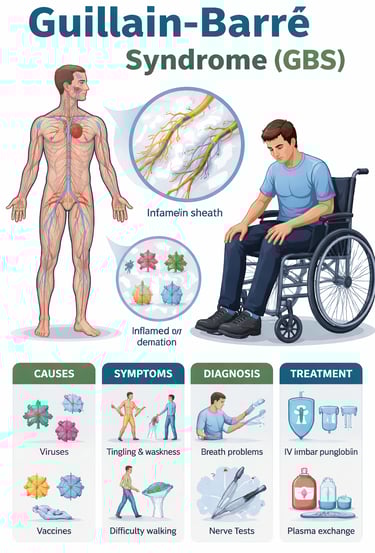
Guillain-Barre Syndrome is an autoimmune neurological condition where the immune system attacks peripheral nerves. These nerves connect the brain and spinal cord to the rest of the body, controlling movement, sensation, and reflexes.
In GBS, the protective covering of the nerves (myelin sheath) or the nerves themselves become damaged. This disrupts nerve signal transmission, causing muscle weakness, tingling sensations, and sometimes paralysis.
GBS often develops suddenly and can worsen over days or weeks. Although it can be frightening, most people recover with appropriate medical care and rehabilitation.
How Common Is Guillain-Barré Syndrome?
Guillain-Barré Syndrome is considered rare. It affects approximately 1–2 people per 100,000 each year worldwide. Despite its rarity, GBS is one of the most common causes of acute flaccid paralysis globally.
Men are slightly more likely to develop GBS than women, and the risk increases with age. However, it can occur at any stage of life, including childhood.
Causes and Risk Factors of GBS
The exact cause of Guillain-Barré Syndrome is not fully understood. However, it is often triggered by an infection or immune response.
Common Triggers
Respiratory infections (such as flu-like illnesses)
Gastrointestinal infections, especially caused by Campylobacter jejuni
Viral infections including influenza, dengue, Zika, or COVID-19
Surgery or trauma (rare cases)
Vaccinations (very rare and benefits usually outweigh risks)
In most cases, GBS develops 1–4 weeks after an infection. The immune system, while fighting the infection, mistakenly attacks the peripheral nerves.
Types of Guillain-Barré Syndrome
Guillain-Barré Syndrome has several subtypes, each affecting the nerves differently:
1. Acute Inflammatory Demyelinating Polyneuropathy (AIDP)
Most common form in Europe, North America, and South Asia
Affects the myelin sheath of nerves
Causes ascending muscle weakness (starting from legs)
2. Acute Motor Axonal Neuropathy (AMAN)
More common in Asia and Latin America
Affects motor nerves only
Can cause severe weakness but often faster recovery
3. Acute Motor-Sensory Axonal Neuropathy (AMSAN)
Affects both motor and sensory nerves
More severe and slower recovery
4. Miller Fisher Syndrome (MFS)
Rare variant
Characterized by eye muscle weakness, loss of balance, and absent reflexes
Early Signs and Symptoms of GBS
Early recognition of Guillain-Barré Syndrome is crucial. Symptoms often begin suddenly and worsen over time.
Common Symptoms
Tingling or numbness in feet and hands
Muscle weakness starting in the legs
Difficulty walking or climbing stairs
Loss of reflexes
Muscle pain or cramping
Severe Symptoms
Weakness spreading to arms and face
Difficulty swallowing or speaking
Breathing problems
Irregular heart rate or blood pressure
Partial or complete paralysis
GBS is a medical emergency. Anyone experiencing rapidly progressing weakness should seek immediate medical attention.
How Guillain-Barré Syndrome Is Diagnosed
There is no single test to diagnose GBS. Doctors rely on clinical evaluation and supportive investigations.
Diagnostic Methods
Medical history and physical examination
Nerve conduction studies (NCS) to assess nerve damage
Electromyography (EMG) to evaluate muscle response
Lumbar puncture (spinal tap) showing elevated protein in cerebrospinal fluid
Blood tests to rule out other conditions
Early diagnosis helps prevent complications and allows timely treatment.
Treatment Options for Guillain-Barré Syndrome
Although there is no cure for GBS, treatments can reduce severity, speed up recovery, and prevent complications.
Medical Treatments
Intravenous Immunoglobulin (IVIG): Helps block harmful antibodies
Plasma Exchange (Plasmapheresis): Removes antibodies from the blood
Both treatments are equally effective when started early.
Supportive Care
Respiratory support (ventilator if needed)
Pain management
Monitoring heart rate and blood pressure
Prevention of blood clots and pressure sores
The Role of Physiotherapy in GBS Recovery
Physiotherapy plays a vital role in recovery from Guillain-Barré Syndrome. Rehabilitation helps restore strength, mobility, and independence.
Benefits of Physiotherapy
Prevents muscle stiffness and joint contractures
Improves muscle strength gradually
Enhances balance and coordination
Reduces fatigue through energy conservation techniques
Improves functional activities like walking and self-care
Rehabilitation Stages
Acute Phase: Gentle positioning and passive movements
Recovery Phase: Active-assisted and strengthening exercises
Functional Phase: Gait training, endurance building, and daily activity training
A personalized physiotherapy program ensures safe and effective recovery.
Recovery and Prognosis
Most people with Guillain-Barré Syndrome recover, although the recovery process can take months or even years.
Recovery Statistics
About 60–80% recover fully or with minimal weakness
10–20% may have long-term residual symptoms
A small percentage may experience severe disability
Factors Affecting Recovery
Severity of nerve damage
Speed of treatment initiation
Age and overall health
Access to rehabilitation services
Early physiotherapy and consistent follow-up improve long-term outcomes.
Possible Complications of GBS
While many patients recover well, complications can occur:
Respiratory failure
Autonomic dysfunction
Chronic pain
Fatigue
Depression and anxiety
Proper medical care and rehabilitation help reduce these risks.
Living With Guillain-Barré Syndrome
Life after GBS can be challenging, but with the right support, patients can return to normal or near-normal activities.
Tips for Patients and Caregivers
Follow a structured rehabilitation plan
Maintain proper nutrition
Manage fatigue with rest breaks
Seek emotional and psychological support
Stay connected with healthcare providers
Frequently Asked Questions (FAQ)
Is Guillain-Barré Syndrome contagious?
No, GBS is not contagious. It is an autoimmune response, not an infection.
Can GBS come back?
Recurrence is rare, occurring in a small percentage of patients.
Is GBS life-threatening?
It can be serious, especially if breathing muscles are affected, but with proper treatment, most patients survive and recover.
How long does recovery take?
Recovery may take several months to a few years, depending on severity.
Conclusion
Guillain-Barré Syndrome is a rare but serious neurological condition that requires early diagnosis, prompt treatment, and structured rehabilitation. Understanding the symptoms, causes, and treatment options empowers patients and caregivers to seek timely care.
With advances in medical treatment and the critical role of physiotherapy, most individuals with GBS can regain independence and quality of life. If you or a loved one is experiencing symptoms suggestive of GBS, seek immediate medical attention and consult rehabilitation professionals for long-term recovery support.
This article is written for educational purposes and is optimized for SEO with unique, original content. For personalized diagnosis and treatment, always consult a qualified healthcare professional.
Expert Physiotherapy Home Services Provide All Dhaka City
Support
info@physioseba.com
© 2019. All Rights Reserved , PHYSIO SEBA
About us
01914-958 611